Why a Society Manager Learned the Hard Way About Faulty HVAC Line Sets

Managing Comfort for Hundreds of Residents

Being a society manager isn’t just about collecting maintenance fees or supervising security. It’s about ensuring hundreds of families live comfortably. One bad decision—or one overlooked detail—can turn into a storm of complaints, and believe me, I’ve faced that storm. For More Knowledge:Click here!

Last summer, our society faced a problem that nearly shook my reputation to the ground: the failure of multiple AC line sets across several apartments.

The First Wave of Complaints

It started with a single call from Tower B:
“Manager saab, our AC isn’t cooling properly. The technician says it’s a gas leak.”

Two days later, the same complaint came from Tower C. Then Tower D. Soon, my phone was ringing so often that even the guard joked, “Sir, your ringtone sounds like an emergency alarm now.”

At first, I assumed it was just old air conditioners giving up after years of use. But when the pattern repeated across new installations too, I realized this wasn’t coincidence.

The Root of the Problem

One reliable technician finally broke it down for me:
“Sir, the AC units are fine. The issue is the line sets—cheap copper tubing, poorly insulated, already leaking refrigerant. These low-grade installations were done to save money upfront, but now every resident is paying the price.”

The truth stung. I had approved the contractor who installed these systems during the last renovation drive. In my attempt to cut costs, I had overlooked the backbone of cooling—the Mini Split Line Set that quietly does the heavy lifting.

The Backlash I Never Expected

You don’t know pressure until 50 residents form a WhatsApp group dedicated to criticizing you. Photos of leaking AC pipes, messages about sleepless nights, sarcastic memes—my phone turned into a live-fire zone.

One resident even stood in front of me during the monthly meeting and said, “Manager ji, if our maintenance fees can’t give us basic comfort, what’s the point of paying?”

That one hit hard.

The Turning Point

I knew a patchwork approach wouldn’t solve this. No more refilling gas every month, no more temporary sealing jobs. We needed a permanent fix. To learn more:https://www.plumbingsupplyandmore.com/

That’s when another resident quietly suggested, “Why don’t you check Plumbing Supply and More? They have high-quality Copper Line Sets and HVAC Line Sets. A few of us ordered from them earlier, and they’ve held up perfectly.”

Skeptical but desperate, I placed an order for a trial batch. The difference was clear—thicker copper, reliable insulation, and fittings that didn’t feel flimsy.

Rolling Out the Fix

We began replacing faulty tubing tower by tower, starting with the worst-hit. And the results? Complaints started dropping within days.

One elderly resident from Tower B even came down to thank me personally:
“For the first time in weeks, I slept without sweating. Whatever you did, keep doing it.”

That gratitude was worth every ounce of effort.

The Lesson Every Society Manager Must Learn

Shortcuts don’t work. Saving a little upfront on a low-grade line set will cost ten times more in complaints and repairs.

Residents notice everything. They may not know what a line set is, but they feel the result every time the AC fails.

The right supplier makes all the difference. For us, sourcing from Plumbing Supply and More changed the game. Durable copper line sets and reliable insulation mean fewer breakdowns and happier families.

Why This Matters Beyond My Story

Managing a society is about more than fixing problems—it’s about preventing them. And in today’s world, where summer feels harsher than ever, the strength of your AC line set determines the comfort of your entire building.line set for mini split system

Take it from me, a society manager who nearly lost trust over a hidden component. Never ignore the tubing that runs behind the walls—it can make or break your reputation.
Related Post

Overview of Recent Mishaps in the Hoosier StateOverview of Recent Mishaps in the Hoosier State

In the recent passage of time, Indiana, known to many as the ‘Hoosier State’, has been witness to an unsettling surge in accidents leading to significant damage and deprivation. The recorded episodes span a broad spectrum — from Industrial misfortunes seen within steel manufacturing units and agricultural mishaps, right through to vehicular incidents that have led to a marked escalation in collision figures. Such happenings cast an unwanted glare on Indiana in nationwide safety dialogues and often feature prominently in Indiana breaking news accident reports. The accumulation of these unfortunate events forms a worrying pattern calling for swift and deep contemplation.

Scrutiny into these calamities offers insights into their multifaceted and intricate origins. Industrial disasters can often be traced back to breaches in safety norms or insufficient training regarding the handling of machinery. On the other hand, road-related incidents commonly encompass elements like impaired driving due to intoxication, over-speeding, or disregard for traffic laws. There are also noteworthy instances pointing towards infrastructural failure such as collapsing bridges or vital construction delays adding another layer of complexity. The magnitude of such regrettable incidents is shaping up an escalating crisis scenario across Indiana’s terrain.

Understanding the Causes behind Major Incidents

In the terrain of the Hoosier State, a painstaking dissection of recent calamities reveals an intricate weave of contributory elements. The kernel of this predicament undoubtedly resides in fluctuating adherence to safety protocols across numerous sectors. This unsettling drift mirrors a slackening in rigid enforcement of these very rules which consequently triggers precarious situations that pose grave perils to safety. Furthermore, deficient instruction and unpreparedness within the workforce have been recognized as pivotal roots feeding many an incident.

Probing deeper into the quagmire, decayed infrastructure surfaces as another potent catalyst. The state’s antiquated systems, deeply embedded across various economic strata haven’t Managed to match strides with a progressively technology-driven epoch. Less-than-optimal upkeep practices allowed seemingly insignificant issues mushroom into catastrophic episodes, birthing a cycle of misfortune. Moreover, climatic extremities often relegated to oblivion played their part in fanning such incidents into existence too. The diverse weather patterns characterizing the state – biting winters and tornado-laden summers- put infrastructural robustness and protective measures through their paces relentlessly. Combinedly these factors spin an elaborate web narrating causal relationships behind this string of lamentable occurrences.

Unlocking Working Capital with Asset-Based LendingUnlocking Working Capital with Asset-Based Lending

Unlocking Working Capital with Asset-Based Lending

As small and mid-sized businesses face increasing pressure to maintain liquidity, alternative financing solutions are stepping in to close the cash flow gap. Among these solutions, Asset based lending has emerged as a powerful, flexible option for companies seeking to convert their balance sheet assets into operating capital.

Unlike traditional term loans, asset-based lending (ABL) allows businesses to access credit based on the value of their existing assets—most commonly accounts receivable, inventory, and sometimes equipment. This structure offers a more adaptable and scalable approach to funding, especially in industries with significant receivables or inventory turnover.

What Is Asset-Based Lending?

At its core, asset-based lending is a type of business financing secured by collateral. Lenders evaluate the quality and value of a company’s assets to determine how much funding can be extended. This means that even companies with weaker credit profiles or recent losses may still qualify if they have strong receivables or inventory.

Commonly used assets in ABL facilities include:

Accounts receivable (usually 30-90 day invoices)

Inventory (finished goods or raw materials)

Equipment or machinery

Real estate (in select structures)

This lending model is ideal for growth-stage businesses, manufacturers, wholesalers, and those with seasonal cash flow cycles. It provides capital tied to business performance, rather than rigid loan covenants or extensive equity dilution.

How It Differs from Traditional Loans

Traditional loans are based primarily on historical financials, credit scores, and fixed terms. By contrast, asset-based lending is dynamic. As your receivables or inventory levels grow, so does your borrowing base.

This revolving credit structure offers several advantages:

Speed: ABL can often be approved and deployed faster than traditional loans.

Scalability: Credit availability grows with your business activity.

Flexibility: Funds can be used for payroll, inventory purchases, operations, or expansion.

Accessibility: Easier approval for businesses with limited profitability but valuable assets.

The Link Between Factoring and Asset-Based Lending

Many businesses exploring cash flow solutions compare factoring, asset based lending, and other forms of alternative finance. While they both rely on accounts receivable as collateral, the mechanisms are different.

Factoring involves selling your invoices to a third-party (a factor) at a discount. You receive immediate cash, and the factor assumes responsibility for collecting the payment from your customers.

In contrast, ABL facilities typically operate as a line of credit. Your business retains control over customer relationships and collections but borrows against the receivables or inventory. In some hybrid structures, lenders may offer both factoring and ABL in one integrated solution.

The right choice depends on your operational preferences, customer base, and growth stage. Companies that want to maintain control of collections often favor ABL, while those needing faster relief or lighter administrative requirements may prefer factoring.

Industries That Benefit Most

ABL is especially useful in asset-rich industries with consistent turnover and receivables:

Manufacturing and distribution

Wholesale and import/export

Staffing and logistics

Oilfield services and construction

Seasonal retail and agriculture

These businesses often encounter uneven cash flow but have significant receivables or inventory on hand, making them ideal candidates for an ABL line.

Strategic Benefits of ABL Financing

In addition to improving liquidity, invoice finance and asset based lending offer strategic advantages that support long-term growth and stability:

Preserves equity: ABL lets you access capital without diluting ownership.

Strengthens supplier relationships: Timely payments increase purchasing power and credibility.

Supports expansion: Funds can be reinvested in equipment, staff, or infrastructure.

Enhances financial forecasting: Predictable access to capital simplifies cash flow planning.

ABL can also serve as a bridge to more traditional financing once a company’s financial profile stabilizes.

Choosing an ABL Partner

Selecting the right lender is critical to maximizing the benefits of asset-based financing. Look for a partner who:

Has experience in your industry

Offers transparent fee structures

Provides reliable advance rates

Delivers responsive service and reporting

Can scale with your growth

An experienced ABL lender should act as a financial ally—not just a funding source—providing insights, compliance support, and flexibility as your needs evolve.

Final Thoughts

In an uncertain economy, asset-based lending gives businesses the power to unlock value from within. By converting invoices and inventory into working capital, companies can build resilience, accelerate growth, and strengthen financial control—without relying on traditional banking restrictions.

Whether used as a short-term funding bridge or a long-term liquidity strategy, asset-based lending is a proven solution for companies seeking performance-based capital that grows with their business. For more information invoice finance and asset based lending

Vaal Bulk Bags: Your Ultimate Guide to Industrial Storage SolutionsVaal Bulk Bags: Your Ultimate Guide to Industrial Storage Solutions

Vaal Bulk Bags are a practical solution for the storage and transportation of a vast range of materials, prominently used in industries such as agriculture, construction, and mining. These flexible intermediate bulk containers (FIBCs) are designed to handle a significant amount of weight, typically ranging from 500 to 2000 kilograms. Their robust design and versatile nature make them an essential component in logistical operations, facilitating the movement of goods both domestically and internationally with ease and efficiency.

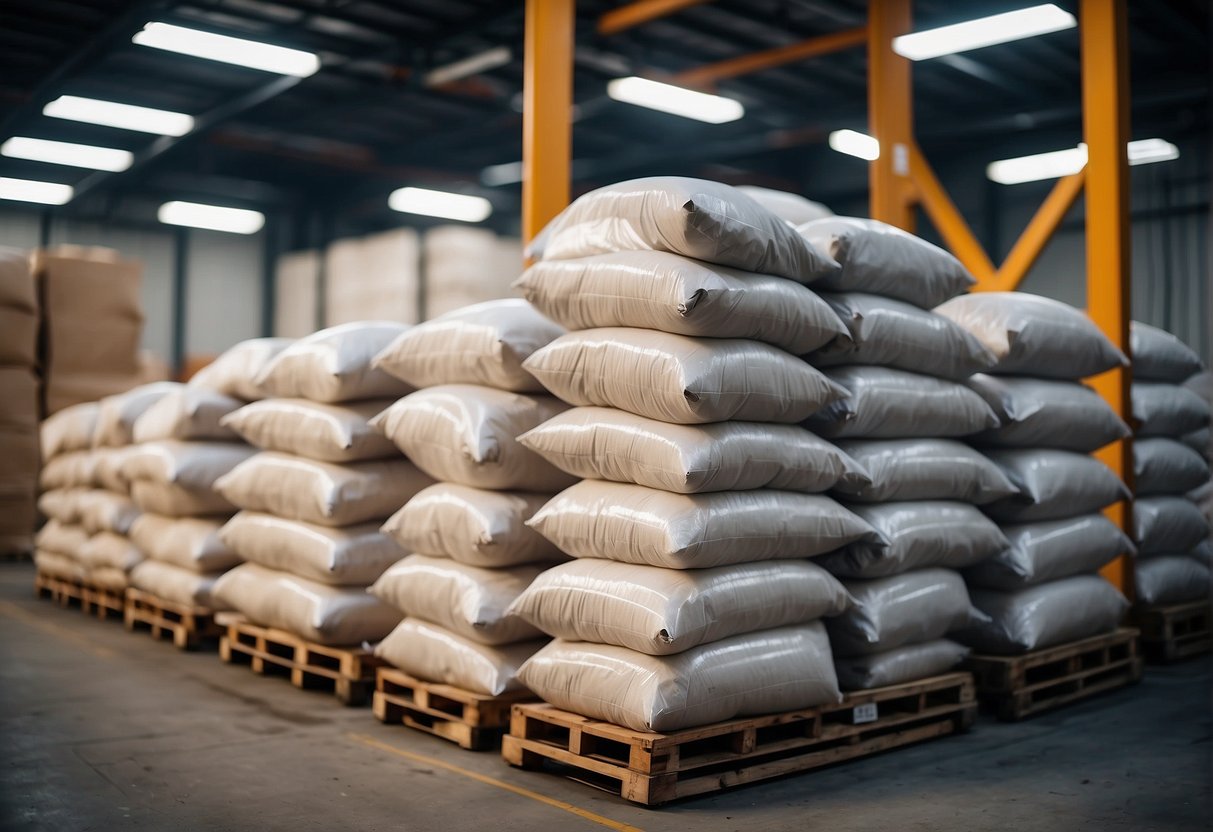
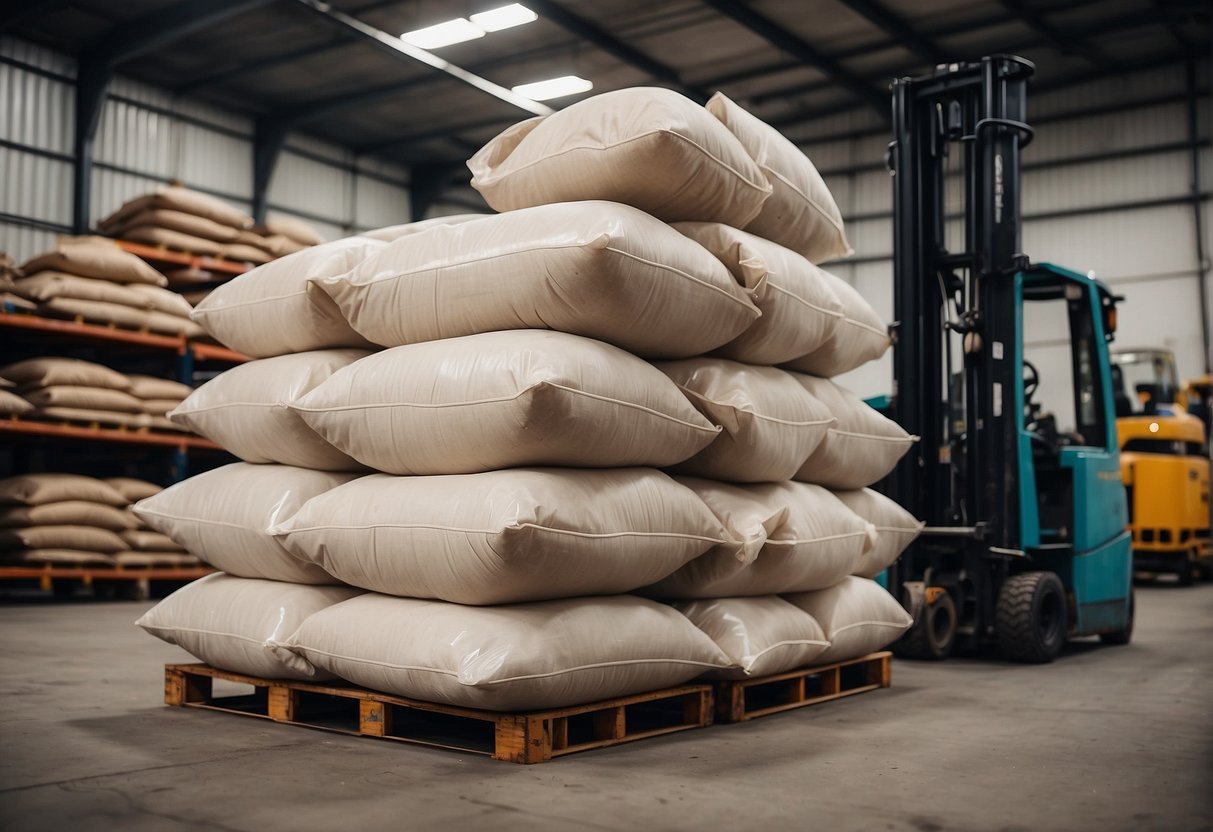
A stack of vaal bulk bags sitting in a warehouse, surrounded by forklifts and industrial equipment

The construction of Vaal Bulk Bags ensures they meet strict industry standards, which is pivotal for maintaining the integrity of the materials they carry. Made from durable polypropylene fabric, they are designed to withstand the rigours of transport and the challenges of storage, such as exposure to the elements and the stress of stacking. The bags usually come equipped with loops or handles, making them easy to lift with machinery such as forklifts and cranes, which is essential for maintaining a swift flow of operations in industrial settings.

Vaal Bulk Bags’ commitment to quality extends to their adaptability to various filling and discharge mechanisms, catering to different industry needs. Whether dealing with fine powders, granules, or larger aggregates, the design of these bags incorporates features such as spouts for controlled pouring or duffle tops for easy access. This flexibility ensures that Vaal Bulk Bags can serve a broad spectrum of purposes, solidifying their reputation as a trusted and efficient tool for bulk material management.

Fundamentals of Vaal Bulk Bags

A warehouse filled with stacks of Vaal Bulk Bags, labeled and organized for shipping

Vaal Bulk Bags, commonly known as FIBCs (Flexible Intermediate Bulk Containers), are essential for the efficient transportation and handling of various industrial materials in Gauteng and beyond.

Material and Design Specifications

  • Material: Vaal Bulk Bags are predominantly manufactured from woven polypropylene, a material renowned for its strength and durability. The design of these containers typically includes loop handles for lifting and may feature different types of tops such as filling spouts, open top, valve top, or skirt top.
  • Design: The structure of these bags ensures flexibility, yet with a stable form that can carry a Safe Working Load (SWL) specific to each bag type. They are engineered with various strength specifications to handle different industry requirements.

Types and Features

There are several types of Vaal Bulk Bags, including the standard builder’s bags for construction materials, and UN certified bags designed for hazardous materials. The features vary by type, with some offering enhanced ventilation, while others are tailored with spouts for easy discharge. For instance:

  • Open Top: Ideal for easy loading.
  • Skirt Top: Allows for securetying and covering.
  • Valve Top: Designed for controlled discharge.

Bags may also have different bottom designs, like flat or with discharge spouts.

Regulatory Compliance and Standards

Vaal Bulk Bags must comply with rigorous regulatory standards. Certified bags, especially those carrying hazardous materials, adhere to UN certifications. meeting these stringent regulations ensures safety in transport and handling, while also affirming quality control. The ISO9001 standard is one of the quality benchmarks for these bags.

Bags for Different Industries

Vaal Bulk Bags serve numerous industries, each with specific requirements for handling and transport of materials:

  • construction: Standard builder’s bags are used for transporting aggregates, sand, and cement.
  • Food: High-grade bags ensure safe food transport.
  • Agriculture: Designed for seeds, grains, and fertilisers.
  • Mining: Heavy-duty bags cater to the transport of ores and minerals.
  • Waste Industries: Specialised bags are used for the collection and disposal of waste products.

Their broad applicability showcases their integral role in industrial flexibility and efficiency.

Practical Applications and Sustainability

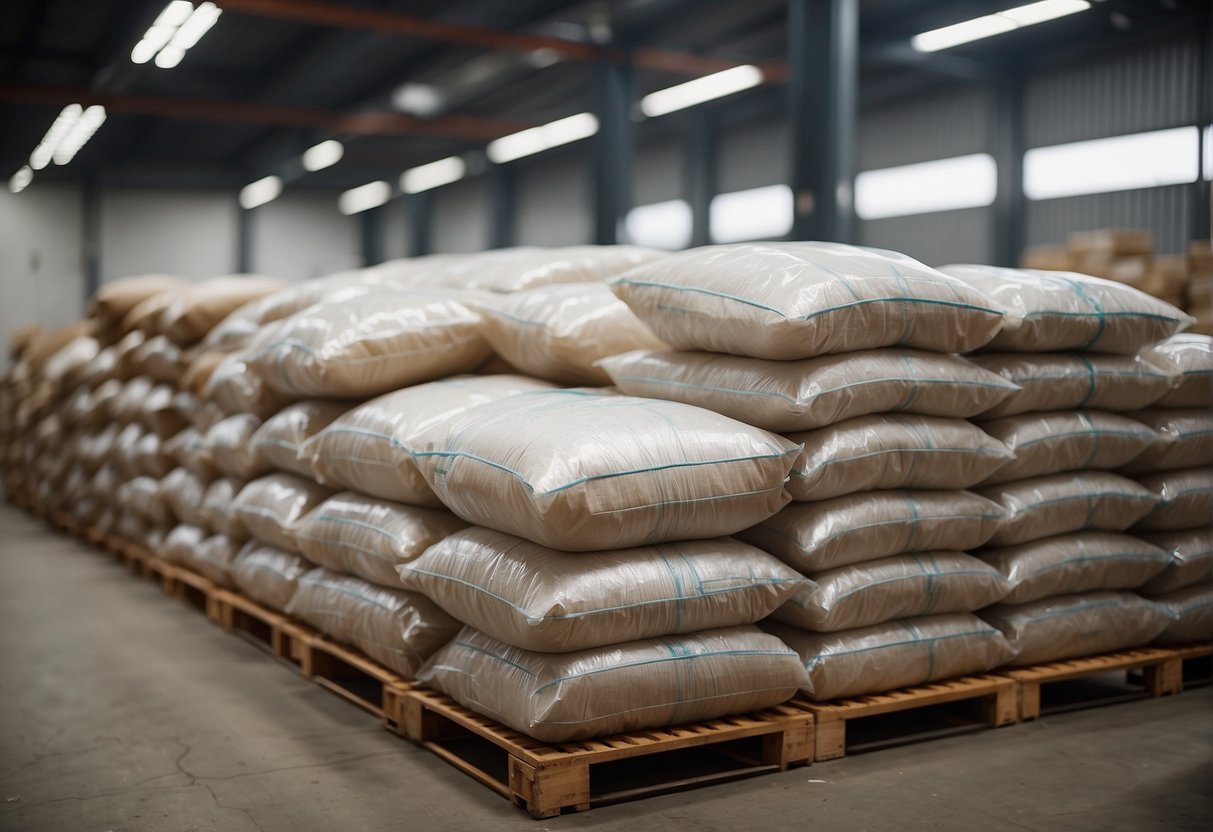
A warehouse filled with stacks of durable Vaal bulk bags, ready for transportation and storage. The bags are labeled with sustainability certifications and symbols

Vaal Bulk Bags are essential for efficient material handling and offer significant sustainability benefits by being reusable and recyclable. They cater to a diversity of sectors, and their design advances both environmental stewardship and economic efficiency.

Usage in Various Sectors

Vaal Bulk Bags, also known as tonne bags or jumbo sacs, are versatile in their application across multiple industries. In the agricultural sector, they are used for transporting feed, grain, and fertiliser. For construction, they carry sand, gravel, and aggregate. In mining, these bags handle ore and waste materials, ensuring stability during transit. The food industry utilises them in the safe and hygienic packaging of bulk ingredients. Even in retail and DIY projects, smaller bags offer convenience and flexibility.

Environmental and Economic Advantages

Eco-friendly practices are at the forefront of Vaal Bulk Bags’ usage. They are designed for multiple uses, thus reducing waste in landfills. The recycling service available extends the lifespan of these bags, promoting sustainability. Economically, their reusability makes them a cost-effective choice, lowering the need for single-use packaging and consequently decreasing expenses.

Customisation and Logistics

Vaal Bulk Bags can be customised to specific sizes and purposes, whether it’s bespoke batches for a unique requirement or a wide range of bags stocked for immediate shipment. These bags offer a stable and affordable choice with high weight capacity, which is critical in transportation and logistics. They can be designed to fit on pallets, facilitating easy loading and unloading, while custom options for small bags or second-hand bags enhance their versatility and appeal.